
The Skiff
Postcard from Salzkammergut

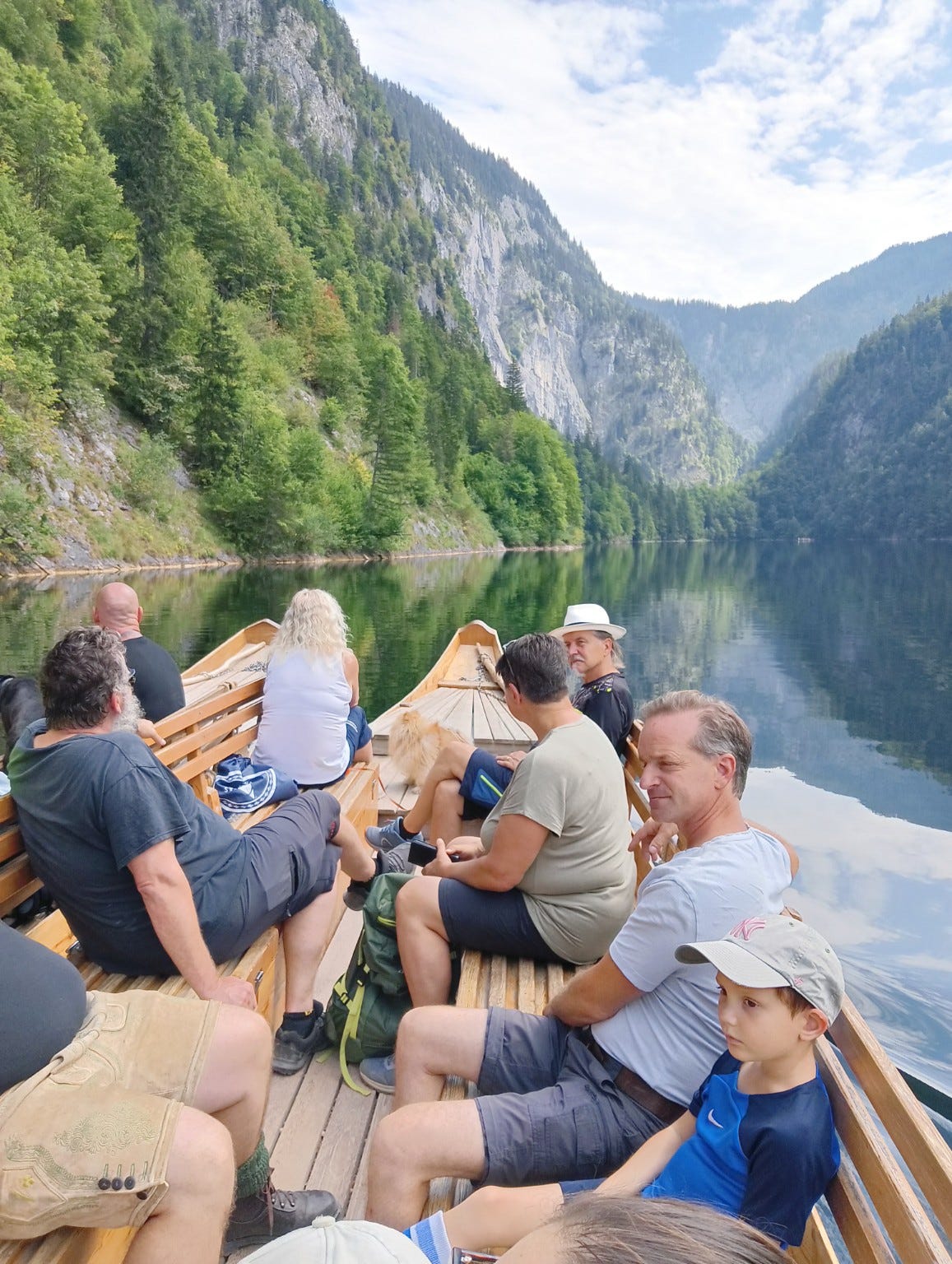
Vroni, the ferrywoman, ran her wooden flatboat the way a mother runs a difficult table. Dogs to the front, she barked, and the two dogs went, the black one belonging to a large, bald Czech sládek, covered in tattoos and governed entirely by his magnetic scowl, and the cream-coloured Pomeranian that belonged to a sallow squall of a woman with a pinched-up face. It was the dog that started it. Before we'd reached the middle of the lake that woman was already living alone in a flat in Eisenerz, chain-smoking in front of the telly, reading die Krone and coughing into the evening. By then she was beyond rescue.
The fat man in the Tyrolean hat Vroni moved to the inside so the skiff wouldn’t tip over. His friends laughed at him. He laughed too. A man who chooses a hat like that in public isn't looking for anyone's approval.
“Passt scho,” he said, settling.
Weight distribution.
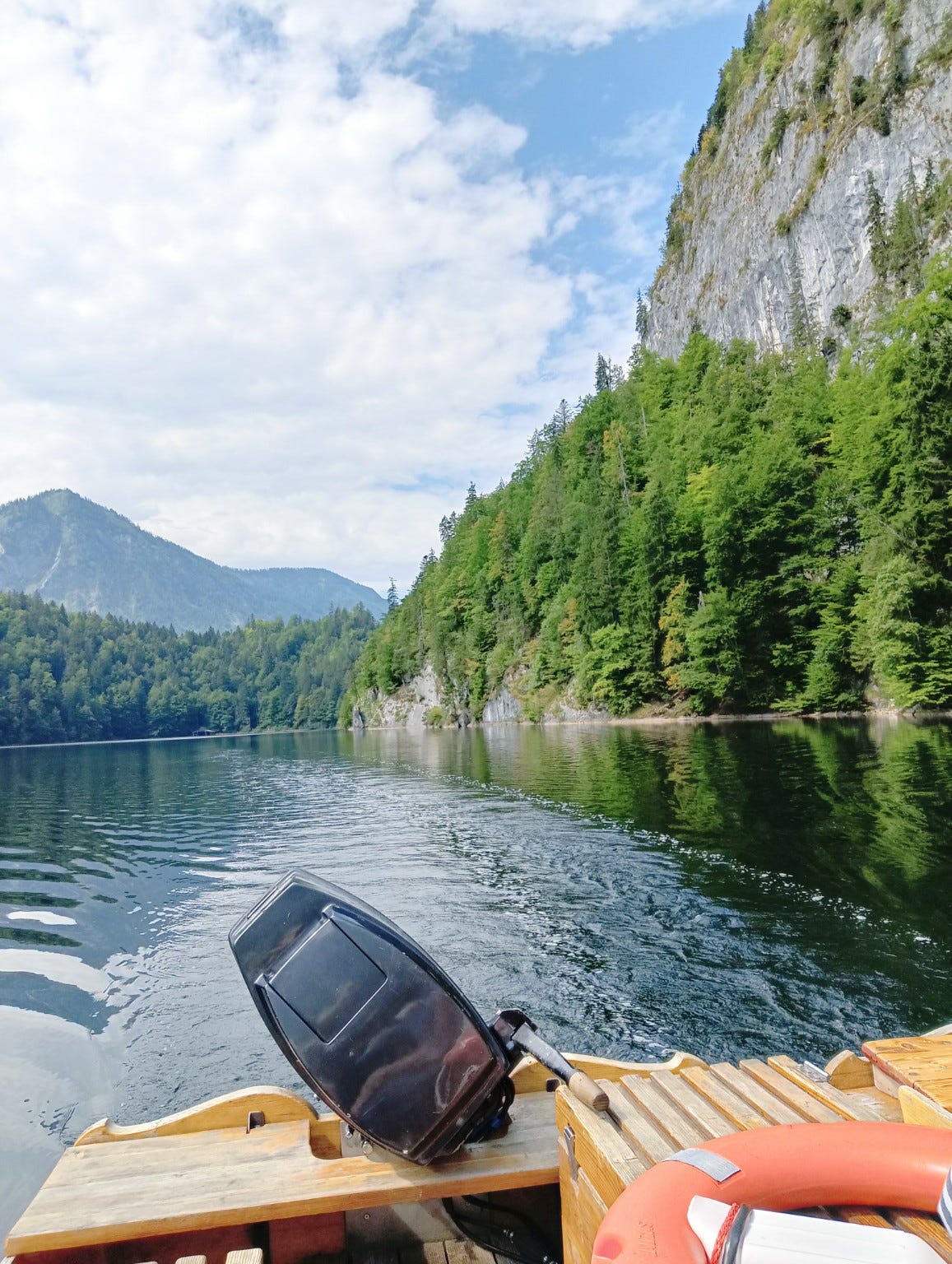
Vroni explained it in a dialect the other passengers unscrambled without noticing. She talked the whole way. Geology, waterfalls, the money.
My dialect aide-de-camp, who must remain nameless for health and safety reasons, kept asking what they were saying, and after a while I told her they'd just warned us about the dragon inside the sheet of limestone that comes out every so often to attack the knees of passengers. I couldn't be arsed translating every word. I was on holiday too, trying to watch the lake, the passengers and the mountains instead of working as a simultaneous interpreter. Besides, Ausseer dialect sits to standard German much as Québécois does to Parisian French. The grammar keeps luring you in, then the vowels wander off into the hills and whole words disappear. By then the dragon seemed the more efficient translation.
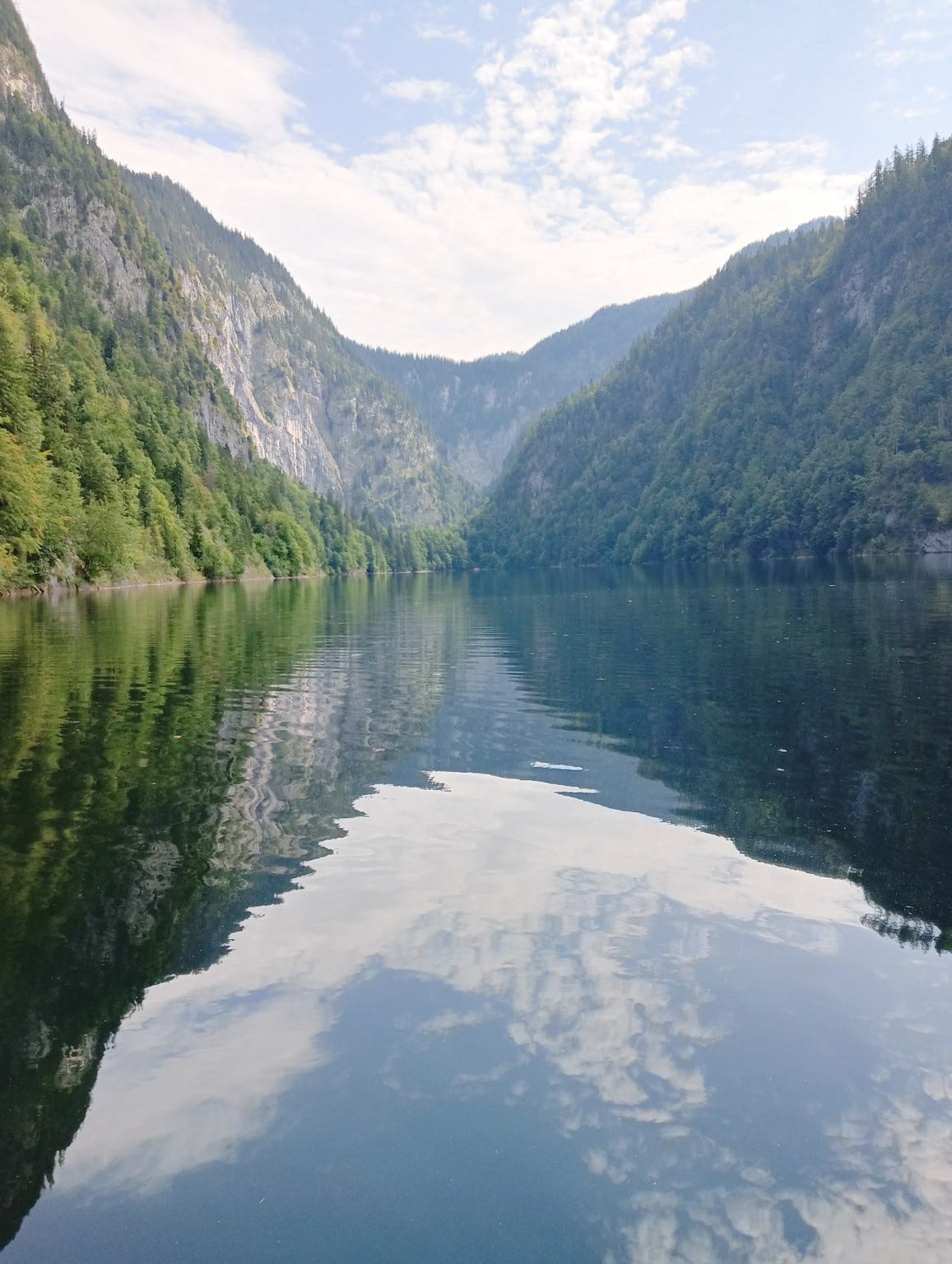
On Grundlsee the water was so clear the reflection had depth, the mountain going down and down into the other world. Then we crossed into the black lake, into Toplitzsee, where below twenty metres the water turns to salt and swallows the light and gives nothing back, and where the Reich once sank its forged British pounds, millions of them, engraved by prisoners, credible enough to fool the Bank of England, meant to flood Britain with them and rot the currency from underneath. The lake keeps them perfect down there in the dark, whole banknotes of an empire that was never real, unspendable forever.
Sixteen souls sat above the salt and the counterfeit and the prisoners who engraved it, and no one tipped, and no one asked.
The man in the hat looked at the black water for a moment.
“Passt scho.”.
Interesting 'day in the life' story. I liked the character in the Tyrolian hat, “Passt scho.”
The photos are a nice touch, but they made me feel homesick...
How could I not follow someone with such an intriguing tagline in their bio!
Also lovely writing, Jaap.